Monday, November 25, 2013

Your Dignity is Non-Negotiable

One story that profoundly sticks to my mind and that I recall with reverence as I navigate this world is that of the trial and execution of Charles Stuart I, King of England, Scotland, and Ireland, who was beheaded by the rump of his own parliament after being tried and convicted for treason in his own country. Aged 48 at the time, Charles' life was a dramatic roller coaster from the moment he was a small child and the constant in it was that he always held himself to a high standard. His dignity was never something to be negotiated.

Born on November 19th, 1600, Charles was the youngest child of the King of Scotland, James Stuart VI and his wife, Anne of Denmark. In March 1603, when Charles was but two, Elizabeth Tudor, Queen of England and Ireland for over forty years, died, and her first cousin twice removed, James, succeeded to the thrones of her kingdoms, as he was her senior genealogical relative. As James and his family made the trip south from Edinburgh to London, one member was conspicuously absent: James' youngest son, Charles. The boy was in such fragile health that his father was worried the traveling would adversely affect him, and in truth, nobody expected Charles to survive to adulthood.

Charles did eventually make the trip, and was determined to overcome both his physical weaknesses and the stammer in his speech. In the first area, he took up a vigorous program of exercise to strengthen his body, taking long runs around the park and eventually taking up horse riding, fencing, and shooting. He would become proficient in all three. Attempting to overcome his stammer, Charles would place pebbles in his mouth and try to speak. The latter therapy, as you might expect, was not as successful.

Charles as a child.

The young prince strove to hold himself to a higher standard than his father James, whose court has had a reputation of casualness and carousing ever since his reign. Charles was appalled by his father's seemingly un-kingly behavior, and now heir to the throne (his stronger elder brother Henry died in 1612), he was determined to go a different, more elegant direction with his own court when the time came. Father and son did agree on one very important aspect of kingship however- the monarch's divine right to rule his realm, accountable only to God. This belief, and Charles' adamant defense of it, would haunt him throughout his entire reign, and ultimately cause his undoing.

James died in 1625, and Charles became King of the three kingdoms. It must have been a very pleasing moment for the young king. Doubted by his own family that he would even survive to adulthood, Charles was now on the throne, helped in no small part by his determination to overcome his weaknesses.
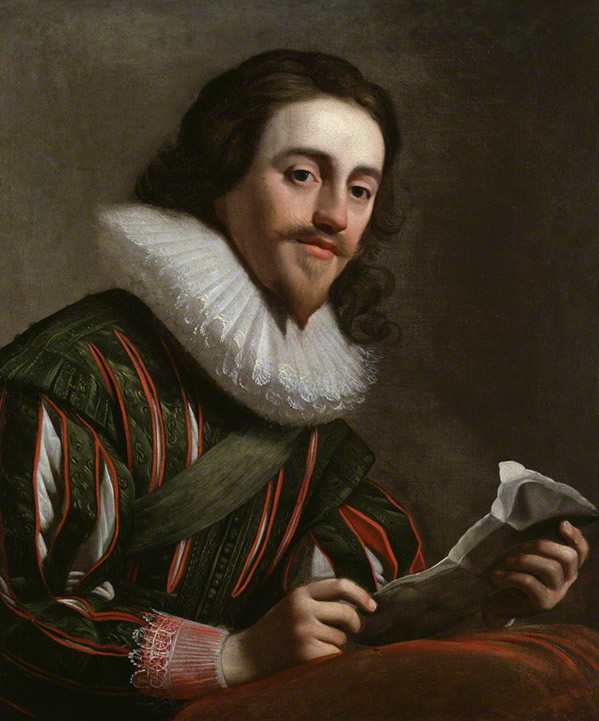
Charles as a young king.

Almost immediately however, as his father before him, Charles was at odds with his Parliaments. Its power over the purse being established during the Middle Ages, Charles, as all Kings of England, needed the consent of Parliament to obtain the money he needed to pay for his projects. However, he found his various Parliaments so disagreeable that he dissolved them very quickly, and was determined to rule alone. This he did successfully for eleven years, finding creative ways to raise money (some of these ways however, such as the infamous Ship Money, were bitterly resented, and cost Charles much goodwill).

Eventually however, troubles in Scotland caused by Charles' religious policies forced him to call a Parliament, as it was the only body that could vote him the money he needed to deal with the situation. This 'Short Parliament' was dissolved quickly, but the situation in Scotland was now so dire that Charles had no choice but to call another one, the 'Long Parliament' and negotiate. Part of these negotiations led to the execution of Charles' close friend and advisor, Thomas Wentworth, Earl of Strafford. In an act of complete misery and humiliation, Charles needed to sign his own friend's death warrant, and he agonized for the longest time before finally caving. This was an act which Charles would never forgive himself for.

During these rounds of negotiations, Parliament, sensing weakness, pounced and demanded, among other things, Parliamentary control of the military. This infuriated Charles. In January of 1642, Charles acted how any man might when pushed to the brink. Seeing what could only be described to him as a body of petulant, unsatisfied children attempting to usurp the ancient laws of the land, the King reacted with swift force. He went to arrest five troublesome MPs in the House of Commons and one in the Lords on a charge of treason, but they were all warned beforehand and escaped. War was now inevitable.


How many of us might react in the same way? It is difficult to keep one's composure in the face of such insolence. This website has been the focus of much the same kind of attacks- the strong mob probing for or sensing weakness in the party from which it wants something. Charles resolved to bravely stand up for what he perceived as his divinely granted rights, and to punish the wickedness of the insolent mob.

The war however, was not kind to Charles or the Royalist cause. He was facing a superiority in manpower from the beginning, the military brilliance of Sir Thomas Fairfax and Oliver Cromwell, and the might of the New Model Army- the nascent genesis of the professional British soldier that would conquer a quarter of the globe in centuries to come. These factors were too much and finally brought the King to defeat. In 1648, after failing in his attempt to restore himself to power in the Second Civil War, the King was brought to trial.

The decision to try Charles was a controversial one. Most of the Long Parliament simply thought that they were fighting to bring the King to the negotiating table. These moderates were purged by the army, leaving only a rump that consented to the trial.
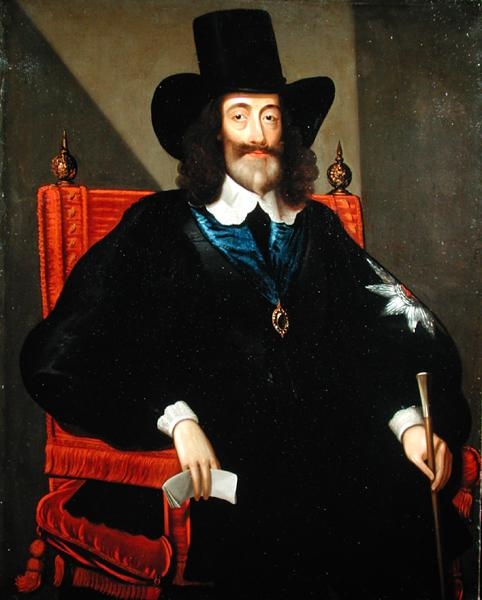

Charles at his trial

Charles' dignity was on display at its absolute best in the last chapter of his life. He refused to cooperate with the court or answer the charges, rightly claiming that there was no law in England that allowed for the trial of the King. He would answer, he said, when he knew by what authority he was brought before this tribunal.

Charles calmly faced down his accusers in this event. He lost his stammer, speaking clearly and powerfully. He explained that the Divine Right of Kings and the ancient laws of the land did not allow for this farce of a court.

Nevertheless, the verdict was never in doubt, and Charles knew this. His power had been gutted by the war. On January 27th, 1649, Charles was declared guilty of high treason and sentenced to execution three days later.

The 30th was a bitterly cold day. Charles demanded extra shirts so that he would not shiver as he made his way to Whitehall in the frigid winter air. He did not want anyone to mistake a shiver from the cold for shivering due to fear. After bidding a tearful farewell to two of his children, he walked the last walk of his life. He was not afraid nor did he even think that his execution was wrong- he felt that it was the just price to be paid for his earlier execution of the Earl of Strafford, and respectfully owned up to this mistake before God.

Addressing the people gathered to witness the event, Charles showed neither fear nor sorrow, and, after assuring that his intention was to uphold the laws and liberties of his realm declared:

"I go now from a corruptible to an incorruptible crown, where no disturbance can be."

The King was then beheaded, shocking the crowd and all of Europe.

Though Charles had been defeated in the war and placed in a position of powerlessness, he never let his enemies rob him of his dignity. His adamant refusal to negotiate cost him the war, his crown, and his life, but his self-worth was not to be lost. In the face of a most stressful situation, he refused to let his enemies set the frame against him, retaining control of the one thing he still had power over- his self-respect.

Posterity will remember a man for his accomplishments and his failures, but it will also remember him for his dignity and character. Thus, though the loser, Charles is often remembered in a positive light, considered a martyr, and his memory carries with it the air of nobility that his character created.

Always strive to hold your self-respect in the highest regard. It is how people will remember you when you are gone and how people will value you in your time in this world. And it is the one thing that is not subject to the chaotic whims of fortune.

The 34th law: act like a king to be treated like one.

So Charles did. Even to his death.


Update: You can also read this article on Return of Kings.
King Charles I Execution 1649

Tuesday, November 19, 2013

Beginning My No Porn Challenge

Yes, I've watched porn. Every guy with access to the internet has. If he's telling you otherwise, he's lying. I've decided to go a month without porn and see how I feel.

While I do think the anti-pornography fervor of the manosphere is somewhat inflated, I don't doubt that it probably has some adverse effects- for some men much more than others. I might be saying it's inflated because I, fortunately, never experienced the very negative effects that have been reported. Maybe that's because I'm still young. Everyone is different of course.

For some more recent history- I went from watching porn every night (for no more than a few minutes usually) around six months ago, to limiting it to once or twice a week, then to only once. With these new habits, my sexual drive and libido has certainly increased, I became more confident, less irritable, and I became more motivated to approach girls (I didn't find that it reduced any anxiety in this area, though). I'm now going to eschew it entirely, at least for this month. I honestly doubt that I'll be going back to watching it at all when the month is over too- maybe every once in a blue moon when I'm feeling particularly bored and horny.

The bottom line is, porn is really boring. It really, truly is. Even when I felt the need to wax the carrot, I generally couldn't watch more than a few minutes. Aside from everything else, it truly does take time out of your day that you could be using to do better things.

So now, I'm going to cut it out entirely. There's even an article about social anxiety related to porn use. We'll see what happens for me.

As I have said on this blog many times, the brain is a biological computer, and it's time for me to write some new programming for mine.

I began my 30-day challenge yesterday, the 18th of November. Your Brain on Porn

Monday, November 18, 2013

The Ultimate Example of Leftist Patronizing

I'm sure you, my good reader, has seen this poster by now:


It's common knowledge that for Obamacare to succeed, it needs to charge less-risky people (men, young, healthy) in the healthcare marketplace an unfair price in order to pay for the more-risky people (women, old, sickly). Conservatives, libertarians, reactionaries, and generally anyone that knows a thing at all about the basics of economics has said this for years. Still, those on the left refused to believe it. The lower-IQ among them probably thought that it was going to be a handout.

To their shock and horror, they realized that their own insurance premiums are being cancelled or increasing in price. As I have said before, the situation reminds me of the time the Carthaginian Senate weeped rivers of tears as they began to pay the indemnity owed to Rome after their loss in the Second Punic War, all the while Hannibal, who was offered no meaningful assistance by his country when it mattered, laughed at their hysteria. I share these feelings.

Amidst a broken website, the lie that all Americans would be able to keep their existing healthcare coverage being exposed, and the reality that yet more wealth generated by the productive classes will be redistributed to the less-productive ones, the governmental PR campaigns have begun in earnest to rescue the fledgling program. There are many subliminal messages in the above poster.

Firstly, the representatives of young men- the people that Obamacare needs the most in order to succeed, are depicted as drunken, low-intelligence, badly-dressed, low-class, pussified, unsophisticated frat boys. Secondly, there is a distinctive lack of diversity in the poster. While in most ad campaigns there is usually a token minority, this poster is of three young white men. Perhaps the makers of the poster thought it would just be too offensive to depict any minority in such an idiotic fashion, and this instinct is probably correct. No one but the nuts in heterodox, anti-Cathedral communities can legitimately represent the interests of white men as a distinctive group, so the path of least resistance is naturally the way to go. And to a large extent, the stereotype depicted above is indeed, true. Can't argue with that.

Nevertheless, the poster is presented this way at its own peril. Young, working, professional, single, middle class men (which are probably white to a somewhat disproportionate degree, but I could be wrong on this), are the demographic that Obamacare needs most to survive. Without them, the system will not work, period.

The smarter among us already know that buying Obamacare insurance at this point is a fool's gambit. We know that paying the fine is going to be less than the cost of the insurance, even when it does go up. There is simply no reason to be paying many thousands of dollars more per year when our risks of health problems are exceedingly low. Of course, nothing is certain in this chaotic world, but the laws of probability are on our side. As the Spearhead says, all we needed before was cheap, catastrophic insurance, which is now illegal according to Obamacare. We are being told to pay a price higher than what we need to, including paying for services which we do not need and will never benefit from: maternity coverage.

Fortunately, there is a form of catastrophic insurance written into the law itself: providers can no longer deny coverage for pre-existing conditions. While this component of the law is the primary driver of higher premiums among the less-risky, it is also our trump card in the off-chance that something terrible really does happen. If we find we are sick, we can simply buy the insurance, and after a possible waiting period, get the coverage we need.

So, while the situation is still likely more expensive than what we had before, we will not need to pay the exorbitant insurance costs year after year in our 20's and 30's when we don't need it (and during which time we want to start building our fortunes in earnest). We have our catastrophic insurance.

It is for these reasons that the idiotic poster above is stupefyingly counterproductive- it patronizes the group it needs the most, portraying them as irresponsible idiots without a clue, when there is an option written into the system itself for that group to get out. I'm sure that most of us that understand this will continue to laugh with glee like Hannibal when the people that made this poster weep for the lack of their target demographic's cooperation. Obamacare Health Insurance Leftism Brosurance

Sunday, November 10, 2013

Conscious and Unconscious Behavior

We are the summation of our memories and the result of our behaviors. These things are in large portion determined by our habits- the things we do because we've grown accustomed to them. These are the result of the programming in the biological computer that is the brain. We no longer think of our habitual behaviors, they just happen automatically because repetition has written new software into the computer's programming. This is why habits are so hard to break.

Habits can be either good or bad. In controlling your habits, you must always make sure that your conscious behavior always overrules your unconscious behavior. A habit is an unconscious behavior. You just do it because you've been programmed to do it. An exercise regimen becomes a habit after a certain amount of conscious repetitions. Similarly, saying or doing things which signify lack of social intelligence is an unconscious behavior because, for better or worse, you have a habit of doing it. How you present yourself with your body language and vocal tones is another fine example.

In creating good habits and good behaviors, it is therefore necessary to make sure conscious good behavior always overrules unconscious bad behavior. This is an advantage high-IQ men have, and we need to utilize it for all it's worth.

Always be aware of yourself and your surroundings. If you are noticing that you are slumping somewhat, strengthen your shoulders. If you notice you are talking in monotone, make a conscious effort to change. If you shy away from approaching, do something to control your fear and take the plunge.

This may require effort, but remember that behavior control- specifically eliminating bad behaviors if not consciously engaging in good ones, is half the battle. Do this until it becomes ingrained and natural, and practice it in the best way that you can.

I used to talk with a rather weak voice and in monotone a lot. I started making videos some years ago and practiced my speaking abilities. The bad behavior described is now almost entirely eliminated. Brief relapses persist, but they are the exception, not the norm. I am very comfortable making presentations to audiences to boot. Hell, it is part of my job. My brain has been rewired.

Now I'm trying to work on slightly fidgety body language when talking, and to talk a bit more slowly- with more conviction and power. The former has diminished significantly, but not to the level that I would like, and I am making conscious efforts to continue the downward trend. Thanks to working out, my body posture is mostly flawless as well.

Your high intelligence allows you to be more aware of yourself and your behaviors. Use it. Conscious Subconscious Behavior

Sunday, October 27, 2013

The Paradox of Game

I'm probably not alone in this, but there seems to be a paradoxical effect when a man discovers game- namely that he can improve his skills in attracting women. I'm mainly extrapolating my personal experiences with this post, but given the natural male biological imperative to reproduce with fertile females, and the dynamics on hand when it comes to navigating the sexual marketplace, I think this is more or less generally valid.

For most of our lives, we were probably indirectly told, and reinforced in our minds, that when it came to attracting women, you either had it or you didn't. The "naturals" would be the guys that tended to get the most desirable women, and the guys below them would generally have to make do with less. We would latch on to the first hot girl (and for the less fortunate, the first marginally attractive girl) that gave us the time of day, as equal or better prospects were highly unlikely. As automatic as an object thrown up in the air comes crashing back down to the ground, the girl was quickly repulsed by this behavior, and the guy was left feeling alone and depressed, forced to again wander around until he gets lucky. For most, this cycle repeats until the man ultimately settles, which is often then followed by a horrible divorce (and this is why it's imperative to discover and start learning game at an early age- the earlier the better, I lucked out in this regard).

However for an increasing amount, some dissatisfaction leads them to discovering game. Walls of illusion come crashing down, and the process of attracting women becomes demystified. The natural feeling upon a man's discovery of this is joy that his problems with the opposite sex can be fixed. However, after the inevitable consumption phase- where the newbie greedily laps up all the seduction advice that he can, a curious paradox arises, one which must be resolved if one is to advance to the next phase.

The "Paradox of Game" can be summed up as follows: the discovery that attracting women is in some degree a skill, and that a man's success with the opposite sex is a trait that can actively be improved, leads to increased anxiety.

Take for instance, that random hottie that a man sees wherever, say two months after discovering game. In the past, he'd fantasize about sweeping her off her feet and getting her in bed, but would never act on those desires, under the false belief that doing so would be totally awkward and inappropriate, and that she would never be interested in him anyway.

Once game is discovered however, he knows that those thoughts and fears are total bullshit. There's nothing stopping him from at least attempting to get with that girl but his own head. He knows what he needs to do. He has a general idea of how to at least get himself a decent shot. But this knowledge has a weird effect: it increases the pressure on him. He has higher expectations of himself and is less willing to accept or explain away failure, and it is this very attitude that can often lead to failure. It makes the already pre-existing approach anxiety worse as well. This is very dangerous and can be a major drain on a man's inner game.

So how is this paradox resolved? There's really no other way but to plough through it and accept that you will have your decent share of failures. This is easier said than done however, and different people will have different ways of getting through this. For me, the presence of a strong, firm, wingman is vital, to keep me in check. High-IQ people like me that have a natural inclination toward introversion and suffer from analysis paralysis really do often need a strong outside pressure to get them moving- not just with women, but in other areas of life as well. It's one of my biggest personal weaknesses. This brain programming can of course be re-written (and this is why a strictly adhered-to exercise regimen is also vital, as it imposes discipline), but nothing at first can be so helpful to someone like me as peer pressure.

The reader's experience of course may differ, but an experienced mentor or peer structure in the game can help to resolve this paradox quickly. It's imperative that this situation be resolved, or you will never advance forward, and worse, curse yourself for it, because the old pre-game excuses are no longer logically coherent.

Game is nothing without self-discipline and community. Both are vital for success in life. Game Pick-Up Self-Discipline Paradox Anxiety

Monday, October 21, 2013

The Musketeers of the Line

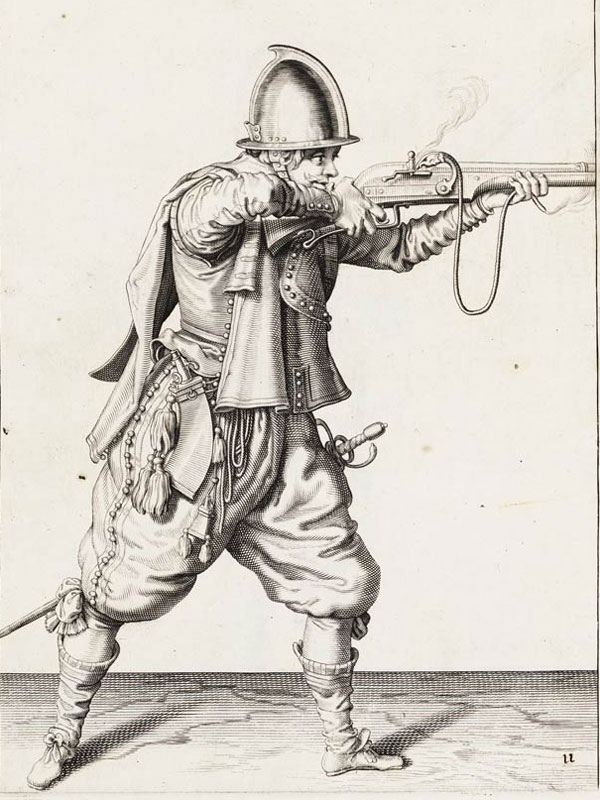
Engraving of an early musketeer, likely from the 16th century (given the helmet).


One of the things that's been coming to my mind recently in my quest to overcome my approach and other social anxieties is the image of the musketeer, standing in line, exposed to enemy fire, bearing his weapon against the enemy.

I will never experience combat, and I will thus never know how truly terrifying it must be to go into battle, but I think that it must have been particularly terrifying to these men, standing in line with early firearms and fighting in linear formations. Unlike other forms of combat, such as phalanx formations, the Roman legion, and modern rapid movement tactics, or even the contemporary pike blocks that musketeers as pictured above would have seen, musketeers were absolutely exposed. They could not rely on the men to their left and right to protect them in the moment of action, as could their fellow warriors in a phalanx or pike block. There was no ducking for cover on battlefields like Breitenfeld, Naseby, or Leuthen for the infantryman armed with a musket. He did not have armor that could protect him from the weapons of the enemy as the Roman legionaries did and modern soldiers do, and given the limited medical knowledge of the day, physicians were often incapable of dealing with any gunshot wound in a vital area, so he could not even call for a medic with hope that he may live.

The musketeer had no hope but to pray that they weren't hit in the broad exchange of fire that defined the battles of this period, and would not essentially disappear until World War II. Instances such as the Duke of Wellington ordering his men to take cover from enemy fire behind a ridge at Waterloo are generally rare. In the moment of action, the musketeer had only his weapon and hope that the chaos of the battlefield would not engulf him.

Despite this, he faced down his fears and planted his feet firmly in the ground, standing the onslaught of cannon, enemy muskets, and cavalry ready to trample or cut him into bits. He was trained to face down these fears and do his job, and he did it with success.

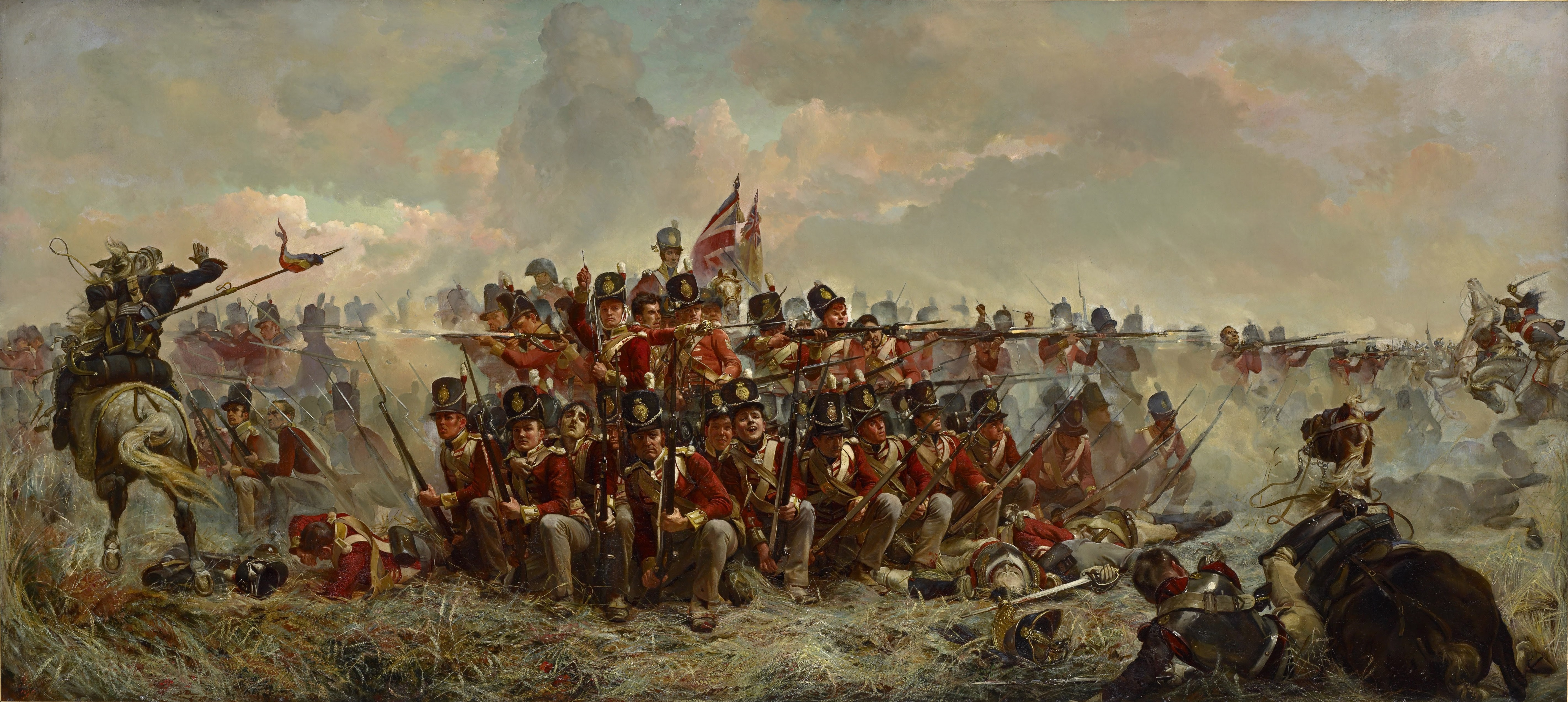
Take this image of these musketeers, standing, fighting, and dying in line, completely exposed to the enemy. Now think of whatever it is you're afraid of- going on a job interview, doing a presentation, approaching a woman- whatever it is. Now think of the musketeers from centuries past facing down enemy fire with no protection- standing in a line almost waiting to die, and yet fighting anyway.

Chances are, whatever it is you're afraid of is utterly ridiculous when compared to the sheer amount of terror these men (or anyone who's gone into combat- but particularly them) faced. Yet through training, they overcame their fears and achieved glory. Who does not remember the stubborn redcoats withstanding the French artillery at Waterloo? The same can happen with you or me. Through training and discipline we too, can overcome any fear and achieve the immortality we desire. The obstacles we face pale in comparison to those that the musketeers did.

And so when I am facing a challenge that gets my brain to freeze out, I will try and picture the musketeers, among other things, whose discipline and bravery are the epitome of what I believe men should aspire to be, and were the cornerstones in the glory that they were able to achieve. Your fear is nothing to them, and your glory awaits.

The 28th regiment at Quatre Bras, by Elizabeth Thompson
Musketeer Gundpowder Warfare Courage

Friday, October 18, 2013

Anita Sarkeesian and the Manosphere

So, you may have heard by now that ABC is doing what can only be described as a hit piece tonight on 20/20 on the Manosphere- the loose assortment of male-oriented websites, forums, and blogs, with the common connection being that they all deviate from mainstream politically correct dogma in at least some ways. This is honestly the best description I can have of the Manosphere, because it is quite a varied group.

While the introductory article for the show is a laughable hack job- a sumptuous offering on the altar of yellow journalism, one thing about it that made me smirk in particular was its claim that Anita Sarkeesian, the infamous owner of FeministFrequency, was attacked by the Manosphere for her critique of women in video games:
Anita Sarkeesian, a media critic and blogger, learned this the hard way after campaigning on Kickstarter to raise funds for a web series on the roles of women in video games. The attacks from the Manosphere were swift.
What's so utterly pathetic about this is that the so-called professional reporters working on this story obviously didn't take the time out of their day to research the two demographics at hand here- the Manosphere, and the Gaming community.

The two demographics do not overlap one iota. Perhaps a tiny percentage of the Manosphere are avid gamers, but that number is likely infinitesimally small. The Manosphere is fundamentally composed of men of all ages that seek to improve their personal, professional, and dating lives, as well as discuss fundamental issues and share knowledge, while critiquing politically correct orthodoxy.

Gamers are well...interested in video games.

Search any major "Manosphere" outlet and you will find that video games are not mentioned in any of them (or perhaps slightly mentioned, but buried under 10,000 posts not mentioning them). The heavy implication here is that the two demographics do not have a sizable cross-section. While no reliable poll data has been done on the subject, I suspect that if a scientific survey were to be done (based on questions of frequency of game-playing and purchases, knowledge of the gaming market, etc.), it would fully confirm my assertion.

It is therefore absurd to label the attacks on Sarkeesian as having originated from the Manosphere. Many in the Manosphere were indeed not even aware of her existence. The only implication from this data can be that Sarkeesian was attacked instead by people in the gaming community- which her presentations were targeted to.

These inconvenient facts will of course not stop the mainstream media from doing anything they can to demonize a movement that deviates from their politically correct confirmation bias.

I do however, take this all as a positive sign- that the mainstream orthodoxy can no longer simply handwave and ignore criticism, and that some fundamental revulsion of the current paradigm is bubbling in the undercurrents of society.

Do I have my disagreements with parts of the Manosphere? Of course. But this can only be called a panicked hack job- based on just Sarkeesian's presence alone, not to mention the other inaccuracies in the reporting. Anita Sarkeesian Feminist Frequency ABC Manosphere